
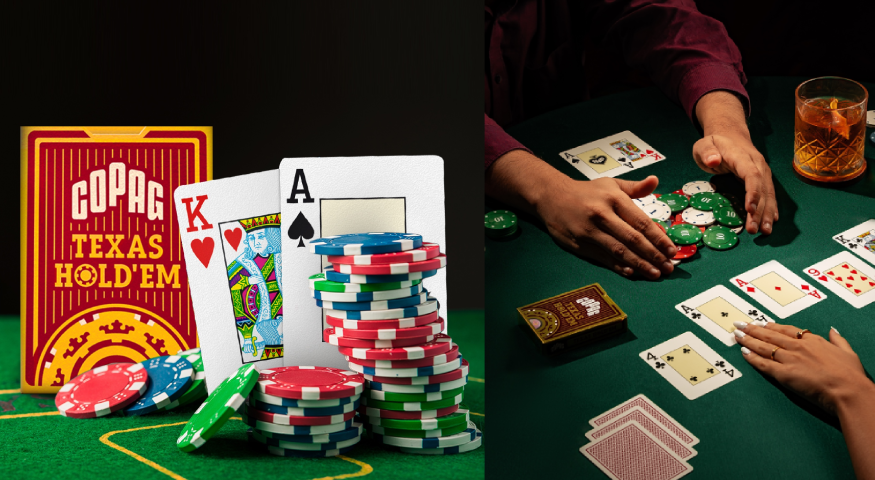
Poker is more than a game of chance. It is a blend of probability, psychology, discipline, and long-term decision-making. From friendly home games to high-stakes tournaments, poker has evolved into a global phenomenon that rewards skillful play and emotional control.
This guide explores poker from the ground up, helping readers understand how the game works, why it remains popular, and how players can approach it intelligently.
What Is Poker?
Poker is a family of card games where players wager based on the strength of their hand and their ability to read opponents. While luck influences short-term outcomes, skill dominates over time.
At its core, poker revolves around:
-
Being dealt cards
-
Placing strategic bets
-
Competing for a shared pot
-
Winning by having the best hand or forcing others to fold
The Objective of Poker
The primary goal in poker is simple:
Win chips or money by either:
-
Holding the strongest hand at showdown
-
Convincing opponents to fold before the showdown
Successful players focus not on winning every hand, but on making profitable decisions consistently.
Popular Poker Variants
Poker comes in many formats, each with unique rules and strategies.
Texas Hold’em
The most widely played version worldwide.
-
Two private cards per player
-
Five community cards shared by all
-
Best five-card hand wins
Omaha
A more action-heavy variant.
-
Four private cards per player
-
Must use exactly two private cards and three community cards
Seven-Card Stud
A classic form with no community cards.
-
Seven cards dealt per player
-
Best five-card combination wins
Five-Card Draw
Often played casually.
-
Five private cards
-
Players can replace cards once
Poker Hand Rankings
Understanding hand strength is essential. Poker hands are ranked from highest to lowest.
Standard poker hand hierarchy includes:
-
Royal Flush
-
Straight Flush
-
Four of a Kind
-
Full House
-
Flush
-
Straight
-
Three of a Kind
-
Two Pair
-
One Pair
-
High Card
Memorizing these rankings is a non-negotiable foundation for any player.
Key Skills That Define Winning Players
Poker rewards players who develop more than just rule knowledge.
Strategic Thinking
Strong players analyze:
-
Position at the table
-
Stack sizes
-
Betting patterns
Emotional Control
Also known as tilt management, this skill prevents poor decisions after losses.
Mathematical Awareness
Basic math improves decision-making through:
-
Pot odds
-
Expected value
-
Probability estimation
Psychological Insight
Reading opponents’ tendencies and spotting behavioral patterns often makes the difference between average and elite players.
Online Poker vs Live Poker
Both formats offer unique experiences.
Online Poker
-
Faster pace
-
Access to multiple tables
-
Lower entry costs
-
Requires sharp focus and discipline
Live Poker
-
Physical tells and table dynamics
-
Slower, more social environment
-
Often deeper strategic play
Players often benefit from experiencing both formats to improve adaptability.
Common Beginner Mistakes
New players frequently struggle due to avoidable errors.
Mistakes to watch out for include:
-
Playing too many hands
-
Ignoring table position
-
Overvaluing weak hands
-
Chasing losses emotionally
-
Failing to manage bankroll properly
Avoiding these pitfalls can dramatically improve long-term results.
Responsible Poker Play
Poker should always be approached responsibly.
Smart habits include:
-
Setting loss limits
-
Playing within a defined bankroll
-
Viewing poker as a skill-based hobby, not guaranteed income
-
Taking breaks to maintain mental clarity
A disciplined mindset keeps poker enjoyable and sustainable.
Why Poker Remains So Popular
Poker’s appeal lies in its balance between luck and mastery. Every session tells a different story, and improvement is measurable over time. Whether played casually or competitively, poker challenges the mind in ways few games can match.
Frequently Asked Questions (FAQ)
Is poker a game of skill or luck?
Poker involves both, but skill outweighs luck over the long term, especially in repeated play.
How long does it take to become good at poker?
Basic competence can be achieved quickly, but mastering poker often takes months or years of consistent practice.
Can beginners start with real money games?
Yes, but starting with low-stakes tables or free games is highly recommended.
What is bankroll management in poker?
It is the practice of only risking money you can afford to lose, ensuring long-term sustainability.
Are poker strategies the same for all variants?
No, each poker variant requires adjusted strategies, although core principles remain similar.
Does online poker require different skills than live poker?
Yes, online poker emphasizes speed and data awareness, while live poker relies more on observation and patience.
Can poker be played professionally?
Yes, but professional poker requires exceptional discipline, study, and emotional resilience.
